Books play an amazing transformative role in widening our experiences and our world.
In my work I always share that words are powerful tools in informing us and transforming the experiences that challenge us at times. For example – when anxious , sad or scared we can always inform ourselves by using safe and affirming words that bring down our levels of anxiety.
Books are similar in allowing us to look into author`s perspectives on the world, on experiences – that might sometimes be real or unreal. Books widen our understanding of the world – books help us to have insight into information, experiences , and thoughts – Books therefore are also inspirational in helping us make our own stories.
Books that influenced me : The two books that I read in detail last year are Dr. Edith Eger `s book– The Choice and another book on resilience is Tara Westover`s Educated – it is about looking at challenges and your own perception of life with a new perspective and making an informed choice of moving forward …
In my next blog I will add on 5 key points from The Choice …. this book is a story of resilience … Resilience adds to our wellness quotient 🌟
To advocate for exercise so you feel motivated to make time to add some form of movement into your routine.
To go into some details of why movement /exercise has such a positive impact on wellness.
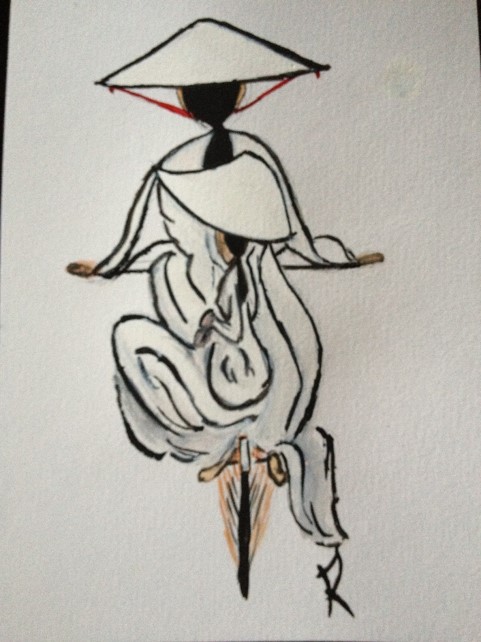
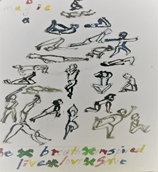
I am sharing here two of my art works … on Yoga and Riding
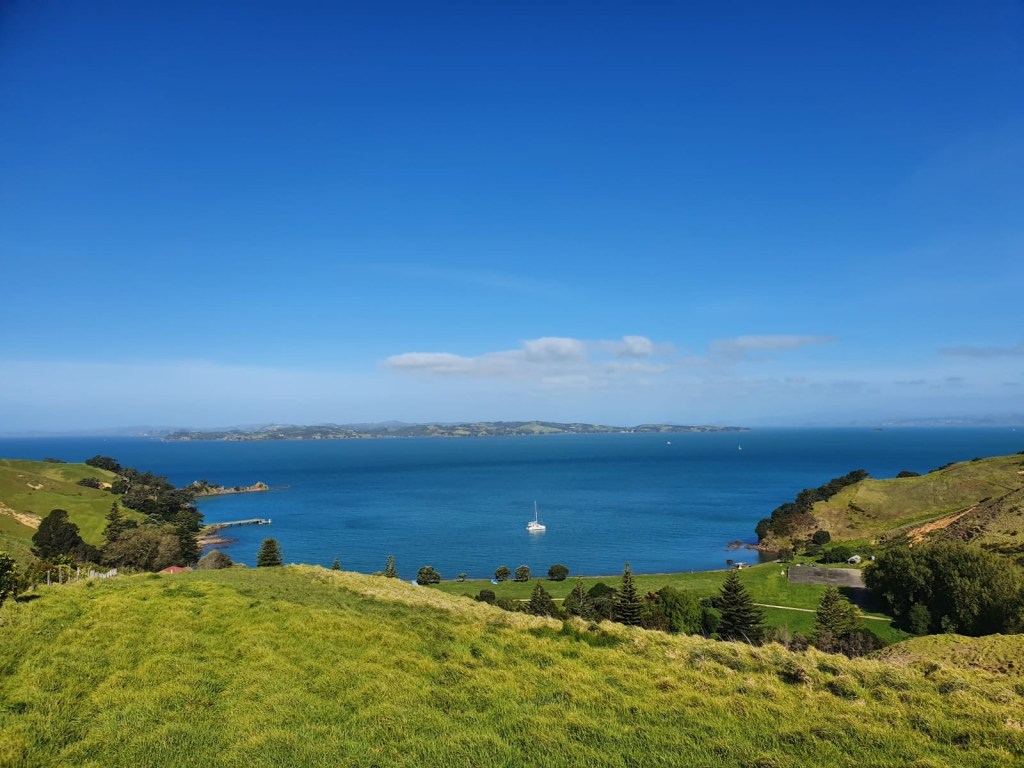
And a favourite spot …
Movement can be the best form of therapy that is freely available to everyone
Why is movement therapeutic??
The brain: Going back to the structure of the brain (refer blog brain and wellness) imagine the brain as a four layered box; each layer has its own exclusive function…. The bottom part or the lowest part of the brain is the stem….
The stem of the brain is very sensitive to any uncertainties that we face … so when we feel uncertain, unsure or worried or angry the brain becomes dysregulated; we are not able to hold focus, or think with clarity.
The part of the brain just above the stem looks after our movements …So when we feel uncertain, we feel displaced and our movements are not the best – we are either fidgety or restless or displaced –
Fascinating truth: The study of the brain is fascinating because how we think and what we feel is also seen in what we do ….
Exercise/ is energising – has a positive impact on our mind – thoughts , feelings and actions
Any rhythmic movement has a calming effect on the brain stem and helps with self-regulation- helps to manage our emotions.
Movement oriented activities are rhythmic, repetitive – allows amazing scope for social connect and mindful wellness.
Collective wellness: Think of the times you have joined a good game of something and have come out feeling tired but happy refreshed and calm. There is a collective happiness that comes from shared sport or walk or movement –this is very beneficial to individual health and happiness.
Mindfulness: Exercise helps us to connect to ourselves; we are immersed in the moment – sheer joy of participation and we follow the steps that are needed for the action…. Long walks are also incredibly calming and regulates movement and breath – which improves wellness,
A tale on swimming: Swimming was not easy; the fear of water was a potential barrier- I had to teach myself to overcome the fear before I could take my first lesson. For days and months I just watched people swim and then noticed that swimming has a beat to it – one –two- three -breathe- which for me was a learning point …. And now I feel blessed for being able to swim a good 40 lengths!! I tend to use flippers though … as it makes my swimming quicker, easier and for me more joyful. Yoga, and swimming are the activities that have helped me fill up my wellness reservoir …..
Breathing has a powerful influence on mind body and wellness. Yoga, swimming and running are all exercises that focus on the breath. So this was why I made sure that my wellness workshop would have a movement component in it ….
In my practice I have always included exercise as integral to interventions and seen the benefits; individuals who access regular robust fitness consistently make steady gains.
In my next blog I will share some highlights from a very commended book SPARK I read in 2016 ; In sharing I hope that this adds to your knowledge on the scientist benefits of exercise on individual and collective wellness
“ The mind is everything … what we think , we become.” Gautama Buddha
Dear readers We all know the word resilience -yet when things get difficult and when caught amidst the grip of challenges … there are times when we feel weak and vulnerable. During such challenging times pacing yourself Finding time to connect to yourself focusing on the breath and Listing the things that are really important to you and Setting yourself a realistic goal towards What you want and where you are heading And Making sure all the time To connect with Positive Experiences and People that help you And manage to make you smile Are The steps of action Towards Resilience
I would love for you to take some time to make your own picture story … I truly believe that all of us face challenges that can be scary But they are not bigger than us Connect to yourself Make a plan And Reap the rewards of achievements- small and big
I am finishing today’s post with Thomas H. Huxley’s words Perhaps the most valuable result of education is the ability to make yourself do the thing you have to do , when it ought to be done , whether you like it or not. It is the first lesson that ought to be learned .
Intention of this post is to share and simplify the concept of resilience – add more wellness to our everyday lives
My story of choosing resilience
Personalising the concept I always knew the meaning of resilience – yes – it seems simple and easy – but there are times when I have struggled to be resilient in some circumstances.
I have needed to break things down for myself –what are my values goals and experiences that are meaningful to me.
I have found immense value in the power of words and language
Making scripts , using words to describe the current context and my goals
Breaking it down to personalised snapshots has helped me to embrace resilience and wellness.
Picasso`s note
The power of words : Using words as how it has helped me to internalise the concept of resilience ….
Resilience for me is about
Being able to manage ourselves, being calm even when we have new challenges
Finding positive and meaningful ways of connecting to our experiences. Feeling healthy and happy within ourselves
Having the readiness to take on new experiences.
In my next post I will share a visual of how resilience happens ….so you can get creative in crafting your own journey of resilience …..
Swimming for fitness , music and art are some of my interests that adds to my reservoir of wellness ….
I write this with conviction …… as having grown into a better version of myself through my creative ventures.
The intention of sharing this is- you might want to find a simple way to identify and connect to the artist within you.
Art creates a forum for meaningful talk…. and helps us to connect and relate to our social world. As a young mum, I introduced both my boys to art at a very early age – as a family we had and continue to have heaps of fun with paper, pencils and lots of colours.
Here is the story of my Love4acause
Initially I did my art for fun and I realised that I loved it so much. The bonus was my family and friends were appreciative of my art. My friends who have received my piece of work as a gift were sincere in their appreciation. This motivated the start of my community artwork project. I began to make a portfolio of my art. I contributed some of my work as cards to some of charities close to my heart.
I began a community page called Love4acause in 2011- the year I organised a fund-raising event for Totara Hospice ….This was a simple sweet and most rewarding experience.Am still so thankful for the support and encouragement from friends old and new. The event was hosted at one of the local schools with performances from David House Music School and Jaye`s Dance Studio performing…
Art build on new and existing connections
Connecting to positive kind friends helps us create nurturing experiences.
Nurturing kind experiences help us to stay connected to ourselves and
Grow into better version of ourselves….
All of us have a unique strength – or capability
Tap into your own strengths
Take ownership of what brings joy for you
It could be pottery, or sketching or cooking or writing
Keep a log of your work
Create and personalise a gift
Share it with family your friends
Be kind to yourself when you make mistakes
Connect with those who have the same interest
Enjoy and experience your wellbeing flourish 😊
You give but little when you give of your possessions. It is when you give of yourself that you truly give – Kahlil Gibran
I choose to call art as an excercise in quiet thinking …..
Art and Wellbeing
To my dear readers,
In today`s post I write on art and reflection . When I work on my art – I find this an intensely peaceful and calming exercise …. This has a significant impact on wellbeing.
Art helps us to connect with your inner self – you choose the colours you like and create shapes that is unique to your liking.
When we engage in art we grow quiet and still; this quietness is very calming for the brain.
When we spend time in thinking or reflecting – we create a very calming space within us.
Taking time to reflect facilitates qualities and values such as kindness and compassion.
Practising any creative activity that is nurturing allows us to be better thinkers and learners.
Cherish routines that has ample scope for thinking and reflection …. walking, swimming, meditating and of course painting. I love to walk and swim; I take time for ,myself to think and feel sheer joy in painting.
INTENTION : In sharing this, my wish for you is to take up something creative, get immersed in the joy of creating – be it making a delightful meal, or learning a new song or painting your unique picture.
I have shared 3 of my artwork with a wee history of it`s making …..
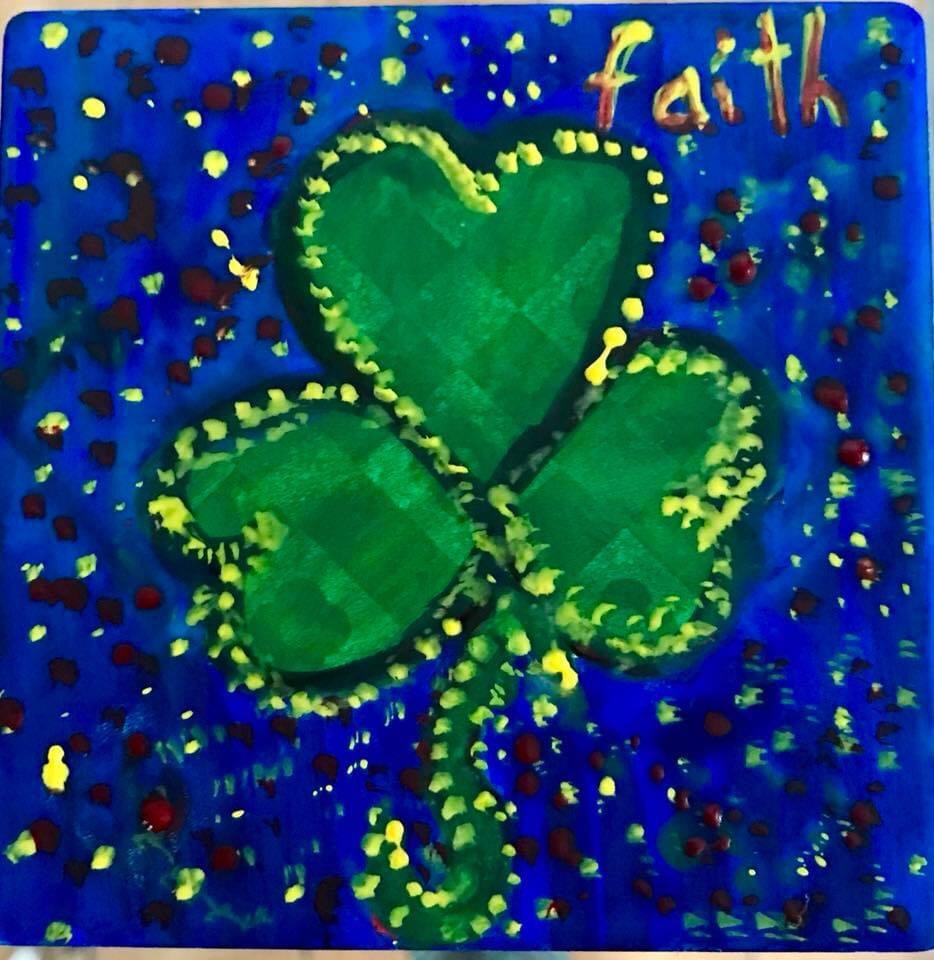
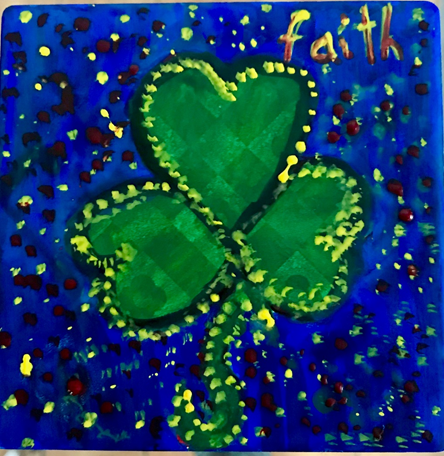
Faith – was a picture that I created for my friend ; I painted on a coaster – and it turned out right 🙂
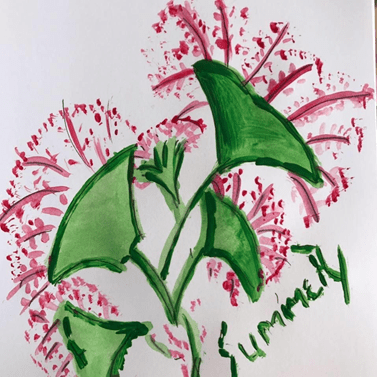
Tagore- was an artist, musician , and poet – he was also the first non European to win the Nobel prize for Literature. I have a great respect for him and did this piece of work for my study.
Abel Tasman: Was about remembering our hike across the spectacular Abel Tasman on a beautiful summer day
Faith Tagore
Abel Tasman
Taking up art:
Focus on the feeling of calm when you sketch or paint
Give your art work a name – even if you think it looks like a scribble – it is still unique
Keep a visual diary
Tune into nature
Use nature as a visual for inspiration
Familiarise yourself with artworks that please you
My love for colours and tryst with art started right from my pre-school days. In my early days I recall vividly that I would just amuse myself working on walls of colours– first a blue , then a green , then a yellow and so on….. Am not sure at what point I delved into simple forms of art – a house with a red roof, a tree and then more….
This is how art evolved for me….The intention of today`s writing is to affirm all of the positives that come from taking up art …..
Here`s to what does for wellbeing…..
The act of drawing or sketching or painting is done mindfully and with care. Art helps one to stay connected with the present
The repetitive nature of tracing on a line is peaceful or
Painting – working on strokes until you get the colour and effects right – is one of the best forms of therapy.
Art is about being in the present moment
Art is therefore very calming and promotes wellness
Art and the brain
Fact
Working on act that is calming , quiet and peaceful – is very good for the brain.
How this works…..
Remember we think of the brain as a four layered box – starting from the
# 4 bottom most layer the stem that looks after the fright or flight response
# 3 movement- the layer in charge of movement
#2 the feelings- the layer that takes care of our feelings and
# 1 the learning or the thinking part of the brain
So when we work on art, the stem of the brain is relaxed.
When the stem of the brain is relaxed we feel peaceful.
When we feel peaceful we are able to focus better on our day to day lives
Studies in brain science indicates that feeling peaceful allows for new braincells to be formed.
This allows us to feel strong and well and resilient.
A bit about Endorphins :
Studies also show that when you enjoy an activity such as art – the brain releases a happy hormone called endorphins.
In this post, I am writing some simple truths on how our brain works …. This is based on the books I have read and the knowledge I have gained in my study and work around learning, wellness and behaviour
Knowing how the brain works – has helped me immensely in my own wellness .
The brain is a powerful organ in our body; It is connected to our head -and so looks after -how we think and how we feel and then how we act
The Brain as a four layered box
Think of the brain as a four layered box- Each layer of the brain has a function and a role to play
The Stem of the brain The bottom most part of the brain is called the stem of the brain -the stem is very sensitive and it picks up any threats or insecurities that we feel-
Movement The thirdlayer – just on top of the stem looks after our movement .
Feelings : The second layer of the brain looks after our feelings. This part of the brain is also called the limbic region. Feelings of sadness, fear ( being scared) ,anger and happiness happen in this region of the brain
Learning The top most layer of the brain looks after how we think and how we learn.This part of the brain is also called the cortical region or the prefrontal cortex . Scientists say that this part of the brain can change and become stronger when we learn or when we enjoy new experiences.
Basic Facts
Sadness, fear ( being afraid) and anger are feelings that impact on your wellness. This means these feelings increase your stress levels and therefore not good for your health and well being.
When there is an increase in stress levels , we tend to become unwell
The three feelings that are not good for your wellness are also not good for your brain . This means when you feel sad or angry or scared , your brain is not going to be working at it`s best.
What happens to our brain when we feel sadness, anger or fear ( being scared ) ??
The brain is powerful organ of our body
The lowest part of the brain is the stem of the brain. The stem of the brain is highly sensitive ,It acts like a siren whenever we feel uncomfortable or not ok
So when we feel sad or angry or scared , the stem of the brain picks up the signals.
The stem then releases chemicals that travel up to our thinking part of the brain.
Just to make it easy lets call the chemicals as” clouds”.
ANGER
So when we feel angry – angry clouds are released into the brain that travels up to the thinking spot.It sits on the thinking spot and prevents us from learning and thinking clearly .
SADNESS
When we feel sad- sad clouds are released into the brain and it hits the thinking spot and prevents us from learning and thinking.
FEAR OR BEING SCARED
Similarly when we feel afraid or scared or in fear – we have these worried clouds that hit the thinking sport and stops us from learning and thinking clearly
It is okay to feel angry or sad or scared – these are emotions that we are always going to feel at different times in our lives .
CHECK IN AND BE MINDFUL
What we need to be mindful is – we need to keep these 3 clouds or feelings ( anger, scared ( fear) and sadness in check.
How do we keep them in check .- because for some of us – we have these feelings visit us almost everyday??
STEPS TO KEEP THE 3 CLOUDS AWAY
Make a plan
Follow simple excercises that allows us to feel stronger each day









 Reach 4 Art